
Everything You Need to Know About Solar in South Africa (2026 Guide)

Solar in South Africa has gone from a luxury upgrade [...]
Solar in South Africa has gone from a luxury upgrade to a practical necessity for many homeowners and businesses. Between rising electricity costs, ongoing load shedding, and the need for reliable backup power, more South Africans are investing in solar energy systems than ever before.
The challenge is that most people feel overwhelmed before they even begin. Terms like hybrid inverter, lithium battery, grid-tied systems, and kilowatt sizing can quickly become confusing. This guide explains everything in simple terms so you can confidently choose the right solar solution for your home or business.
How Does Solar Power Work?
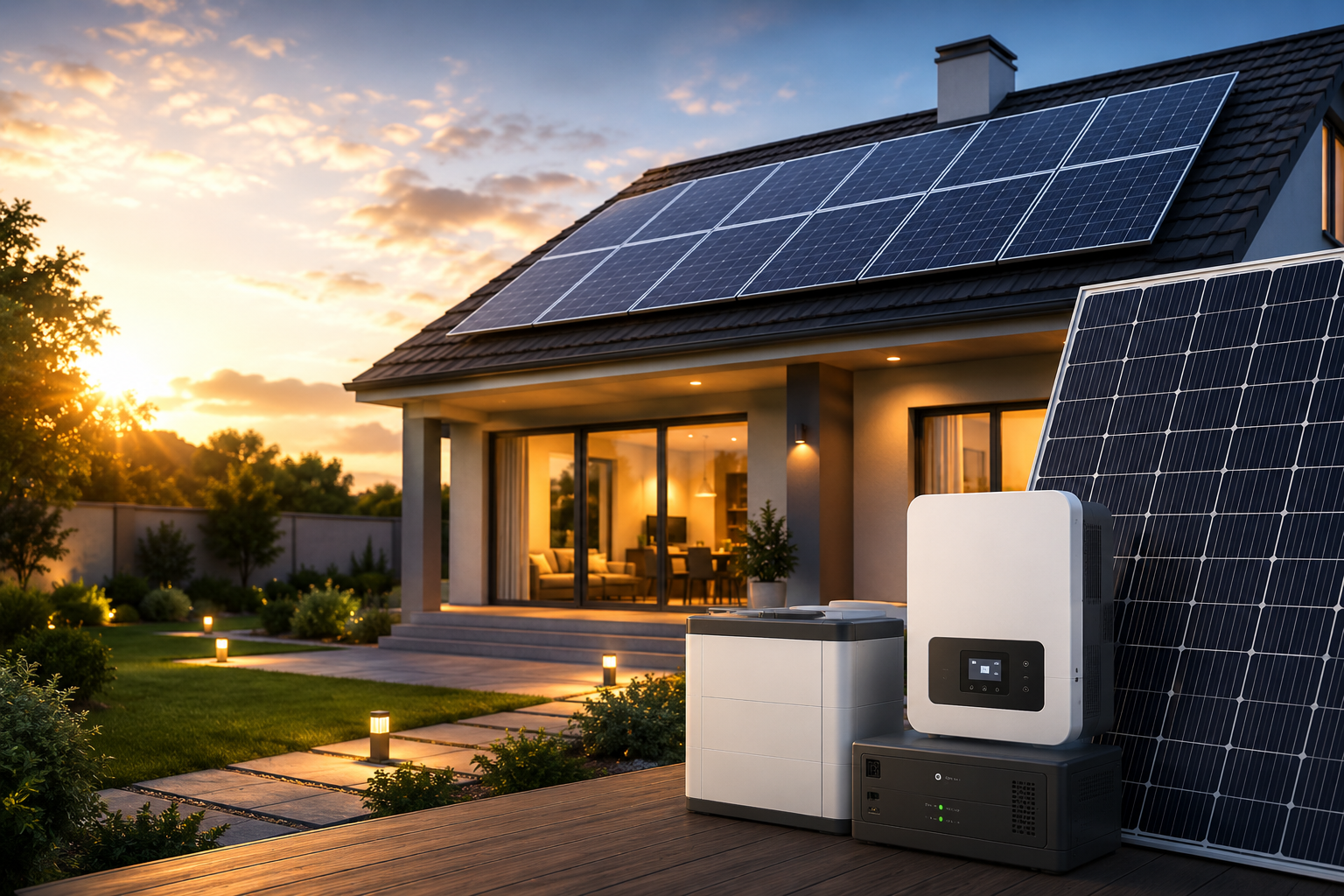
A solar power system collects energy from sunlight using solar panels installed on your roof or property. The electricity generated is converted into usable power through an inverter and can either be used immediately, stored in batteries, or sent back into the grid depending on the system type.
A basic solar setup usually includes:
- Solar panels
- Inverter
- Battery storage
- Mounting equipment
- Monitoring system
When the sun shines, the system generates electricity for your property. If batteries are included, excess power is stored for use during load shedding or nighttime hours.
The Different Types of Solar Systems
Grid-Tied Solar Systems
A grid-tied system remains connected to Eskom or municipal electricity. These systems help reduce electricity bills during the day but usually do not provide backup power during outages unless batteries are added.
Best for:
- Lowering electricity costs
- Homes with stable grid access
- Businesses operating mainly during daytime hours
Off-Grid Solar Systems
Off-grid systems operate completely independently from the national grid. These systems rely entirely on solar panels and battery storage.
Best for:
- Farms
- Remote properties
- Areas with unreliable electricity infrastructure
Hybrid Solar Systems
Hybrid systems combine solar power, batteries, and grid electricity. These are the most popular systems in South Africa because they provide backup power during load shedding while still reducing electricity costs.
Best for:
- Most South African homes
- Businesses needing uninterrupted power
- Areas heavily affected by load shedding
How Much Does Solar Cost in South Africa?
The cost of solar depends on several factors:
- Property size
- Energy consumption
- Battery capacity
- Inverter size
- Installation complexity
- Product quality
As a rough estimate in South Africa:
- Small backup systems: R40,000 – R80,000
- Medium hybrid home systems: R90,000 – R180,000
- Larger residential systems: R200,000+
Premium brands may cost more initially but often provide better long-term reliability and support.
Trusted Solar Brands in South Africa
Victron Energy
Victron is known for premium-quality solar and backup systems with excellent reliability and advanced monitoring features.
Deye
Deye hybrid inverters have become extremely popular in South Africa due to their affordability and strong load shedding performance.
Growatt
Growatt offers cost-effective solar solutions suitable for many residential and small business installations.
How to Choose the Right Solar Installer
Choosing the right installer is just as important as choosing the equipment itself.
Look for installers who:
- Use trusted brands
- Provide proper warranties
- Offer after-sales support
- Conduct energy assessments
- Explain the system clearly
- Have verified installation experience
Avoid choosing purely based on the cheapest quote. A poorly installed solar system can become expensive very quickly.
Solar Tax Incentives and Rebates in South Africa
South Africa has introduced various tax incentives over recent years to encourage renewable energy adoption. These incentives can change annually, so it is important to check current regulations or speak to a qualified solar provider.
Businesses may also qualify for accelerated depreciation benefits on renewable energy investments.
How to Choose the Right Solar System Size
The correct system size depends on:
- Your monthly electricity usage
- Which appliances you want to run
- How long you need backup power
- Your available roof space
A proper assessment helps avoid overspending or undersizing your system.
Common Solar Mistakes to Avoid
- Buying the cheapest equipment available
- Ignoring battery quality
- Using inexperienced installers
- Choosing the wrong inverter size
- Not planning for future energy growth
Why More South Africans Are Investing in Solar
Solar energy provides:
- Protection from load shedding
- Lower electricity costs
- Increased energy independence
- Improved property value
- Long-term savings
For many South Africans, solar is no longer simply an upgrade. It has become part of everyday resilience.
Explore Solar Solutions with Blue Box Tech
Blue Box Tech offers solar power solutions designed for South African homes and businesses. Whether you need backup power during load shedding or a complete energy-saving solution, our team can help you choose the right system for your needs.
Explore our solar range or use our solar sizing tools to find the ideal setup for your property.
Share This Article
Follow Us
Latest Articles
October 27, 2026
October 27, 2026
October 27, 2026